Installation / A sound starting point
Plan the Fixings and Access
Installation is a site decision, not simply a choice of screws. Resolve permissions, surface construction and the delivery route before committing to a position.
Check the place before the hardware
Choose a position where a courier can find the receiving opening without entering an unsafe area or guessing which doorway belongs to you. Keep the approach clear of steps, loose surfaces and moving gates where possible. The address should be legible from the normal approach, and the parcel station should not obscure a doorbell, meter, ventilation opening or emergency equipment.
Confirm ownership and permissions. A tenant may need written approval for holes, anchors or exterior changes. Apartment residents should consult building management even when the intended position appears to be within their own entrance area. Historic buildings, protected façades and local planning controls can impose additional limits; ask the relevant authority or a suitably qualified adviser when uncertain.
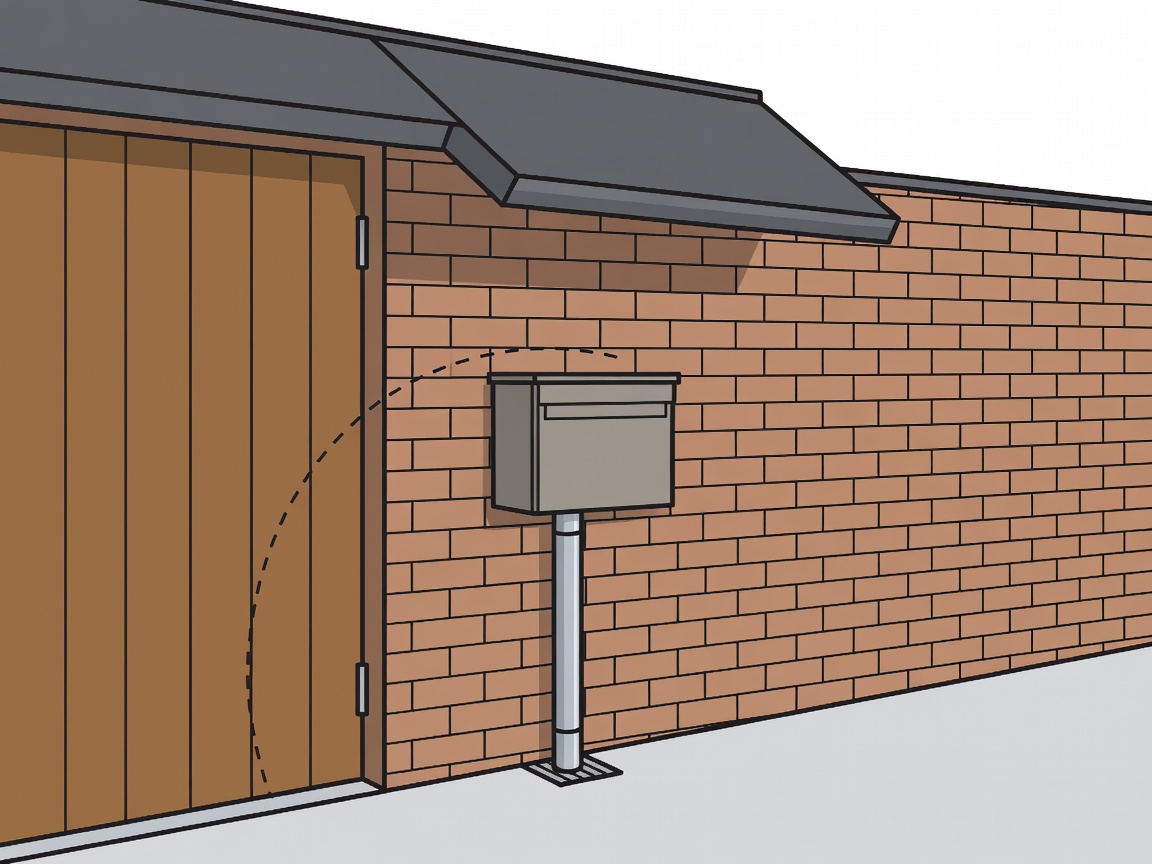
Check the position in rain and during normal household use. A canopy edge can concentrate drips directly onto the lid. A convenient wall may be part of a drain route, while a corner beside a gate can become inaccessible when a vehicle is parked. The location should work during ordinary arrivals, not only while the area is empty.
Respect the surface and its limits
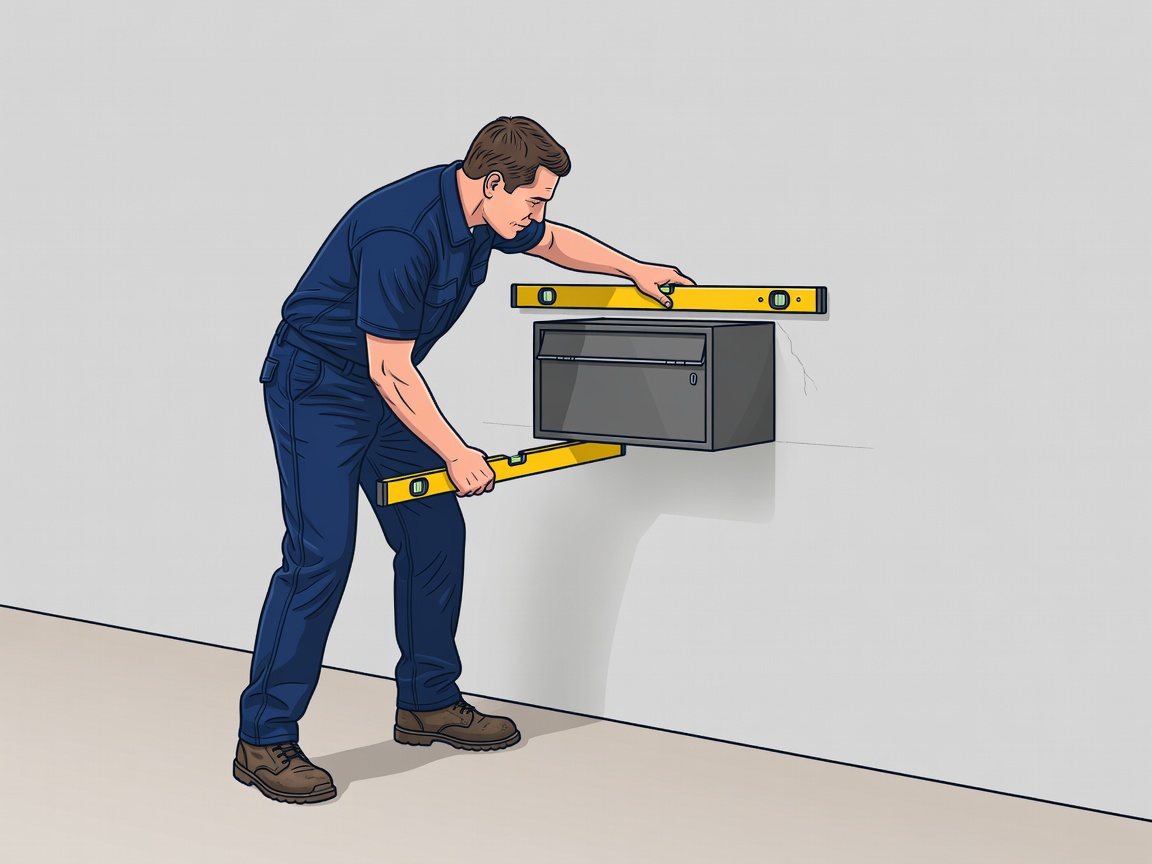
Follow the manufacturer’s installation instructions for the exact model and mounting arrangement. Fixings suitable for sound concrete are not automatically suitable for hollow masonry, thin cladding or deteriorated mortar. The enclosure’s weight is only part of the load: parcels, operation of the doors and foreseeable external forces also matter.
Before drilling or excavating, establish the position of concealed electrical cables, water pipes and other services using appropriate methods. Do not assume that a visually blank wall is safe. Where construction or service routes are uncertain, stop and use a qualified installer. This guide cannot specify anchor sizes, embedment depths or structural capacities for an unseen site.
Check whether fixings could bridge damp protection, damage waterproofing or conflict with cavity-wall construction. Do not improvise a sealant-only attachment for a product intended to be mechanically anchored. For a ground-mounted model, ask about the required base and drainage arrangement rather than assuming that paving slabs or an existing thin screed provide a suitable foundation.
A short pre-installation review
Do I have permission and a suitable position?
Confirm ownership, landlord or building approval where needed, the clear approach, weather exposure and access for all household users. Keep any written approval with the product instructions.
Have the surface and hidden services been assessed?
Identify the construction and relevant services before work starts. Ask a qualified installer to assess uncertain materials or an installation involving electrical work. Do not drill on the strength of a generic online checklist.
Will the box still operate once fixed?
Check lid travel, retrieval-door clearance, key access, drainage, maintenance access and the practical reach to the opening. Confirm that the door or gate cannot strike the enclosure.
Give the courier a usable instruction
Write a short description of an observable place. “Parcel box to the left of the front door, beneath the porch” is more useful than “usual safe place”. Add instructions through the carrier’s supported system, and check that they are saved for the relevant shipment or address. A sign can help identify the box, but it does not override the carrier’s conditions.
DHL, UPS, FedEx, DPD and Evri each offer different services, recipient options and restrictions. Availability can vary by country, sender and parcel type. Do not assume a driver can use a third-party access app, enter a building or leave a signature-required item simply because you have installed storage.
Avoid publishing household alarm details or permanent access codes on the box or in a publicly visible note. If a supported delivery arrangement uses temporary access, understand how it expires and how you revoke it. Never ask a courier to bypass a locked entrance or leave a required fire door unsecured.
Test the whole receiving routine
Once the installation is complete, check that every moving part operates freely and that the enclosure does not rock or shift under normal use. Ask the installer to explain the fixing arrangement and maintenance checks. Keep spare keys, warranty details and the installation instructions somewhere household members can find them.
Try a representative parcel, retrieve it, then try a second deposit. Confirm that drainage remains open and that a sensor, if fitted, reports the event you expect. Review the arrangement after early deliveries and severe weather. Loose fixings, damaged seals or awkward access are reasons to stop using the affected feature until it has been assessed and corrected.